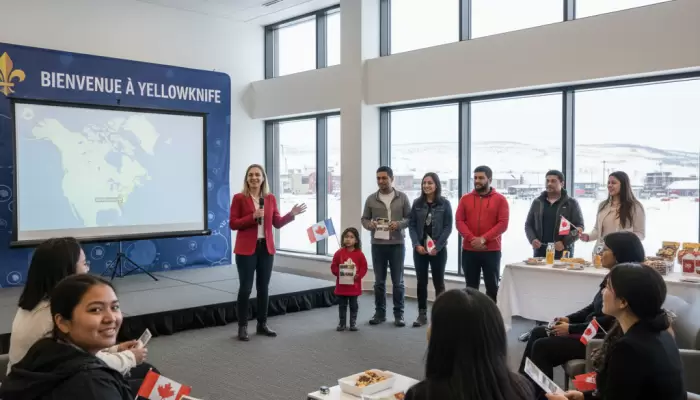
Yellowknife Becomes the Final Welcoming Francophone Community
From: Immigration, Refugees and Citizenship Canada
Introduction to Welcoming Francophone Communities
Yellowknife has been chosen as the 14th and concluding Welcoming Francophone Community under Canada’s Action Plan for Official Languages. This selection marks a significant step in fostering inclusivity and integration for French-speaking immigrants.
June 7, 2019 – Yellowknife, NWT – As part of the Government of Canada’s initiative, 14 communities nationwide will receive funding to develop programs that aid French-speaking newcomers in settling into Francophone minority areas. This effort, backed by a $12.6 million investment over three years, was highlighted in Budget 2018.
The Meeting Our Objectives: Francophone Immigration Strategy, unveiled on March 13, 2019, promotes collaboration among federal, provincial, territorial, and community partners. It aims to bolster the vitality of official-language minority communities by increasing French-speaking permanent residents outside Quebec and ensuring their successful integration and retention.
Communities Embracing Francophone Newcomers
List of Welcoming Francophone Communities
The selected communities are: Prince George (British Columbia), Calgary (Alberta), Moose Jaw and Gravelbourg (Saskatchewan), Seine River Region (Manitoba), Hamilton (Ontario), Hawkesbury (Ontario), Sudbury (Ontario), Labrador City–Wabush (Newfoundland and Labrador), Haut-Saint-Jean (New Brunswick), Municipality of Clare (Nova Scotia), Évangeline Region (Prince Edward Island), Whitehorse (Yukon), Yellowknife (Northwest Territories), and Iqaluit (Nunavut).
Official Statements
“Francophone communities are opening their doors to French-speaking newcomers. Yellowknife will now offer even more opportunities for immigrants to feel at home and integrate into Canada’s fabric. Our Francophone Immigration Strategy is dedicated to increasing French-speaking immigrant numbers in minority communities.”
– The Honourable Ahmed Hussen, Minister of Immigration, Refugees and Citizenship
“Yellowknife’s selection strengthens our Franco-Ténoise community, addressing workforce and community needs. With funding of $305,670, Yellowknife can warmly welcome more Francophones to the Northwest Territories.”
– Michael McLeod, MP, Northwest Territories
“Creating a welcoming Francophone hub in Yellowknife will enhance newcomer integration. Collaborating with partners, we aim to help new arrivals settle and remain in Yellowknife.”
– Linda Bussey, Executive Director, Fédération franco-ténoise (FFT) (Yellowknife)
Important Insights
- Francophone Welcoming Communities Initiative
- This pilot project is led by IRCC alongside Francophone communities, involving Réseaux en immigration francophone, FCFA, and CAIF.
- Francophone Immigration Strategy
- Initiatives under this strategy have commenced, with significant announcements made during National Francophone Immigration Week in November 2018.
- By December 2018, 4.5% of Express Entry invitations were extended to French-speaking candidates, up from 2.9% in 2017.
Further Resources
- Meeting Our Objectives: Francophone Immigration Strategy 2018-2023
- Francophone Immigration (Outside Quebec)
- Action Plan for Official Languages – 2018-2023: Investing in Our Future
- Immigration Minister announces key initiatives to promote Francophone immigration from pre-arrival to citizenship
- Federal/Provincial/Territorial Action Plan for Increasing Francophone Immigration Outside of Quebec
Contact Information
Media Contacts
Mathieu Genest
Minister’s Office, Immigration, Refugees and Citizenship Canada
613-954-1064
Media Relations
Communications Branch, Immigration, Refugees and Citizenship Canada
613-952-1650
IRCC.COMMMediaRelations-RelationsmediasCOMM.IRCC@cic.gc.ca
Frequently Asked Questions
What is the purpose of the Welcoming Francophone Communities initiative?
The initiative aims to support French-speaking newcomers in settling into Francophone minority communities across Canada.
How many communities are involved in the initiative?
A total of 14 communities have been selected to participate in this program.
What are the goals of the Francophone Immigration Strategy?
The strategy focuses on increasing French-speaking permanent residents outside Quebec, supporting their integration, and enhancing community capacity.
For more details, read our immigration guide.